THE HULCAN GAMBLE

Can Two Young Operators Resurrect Matches Fashion Where Industry Giants Failed?

When Cultural Intelligence Meets Structural Forces in Luxury Retail's Graveyard
A Critical Analysis
Disclaimer: This analysis is speculative and based on publicly available information as of January 2026. Probability assessments are informed estimates using industry benchmarks, not predictive financial models. The author has no financial interest in Hulcan or related entities. All figures and projections should be treated as illustrative, not definitive.
EXECUTIVE SUMMARY
The Situation: Joe Wilkinson and Mario Maher, founders of Heat/Mile, have raised $150M to resurrect Matches Fashion through their new holding company Hulcan. They acquired Matches' intellectual property from Frasers Group for ~£20M following the retailer's March 2024 collapse, which left £50M in unpaid debts to brands.
The Thesis: They're betting that an ecosystem approach (Mile off-price + Matches full-price + Raey owned-brand) combined with cultural narrative positioning for Gen Z can succeed where traditional multi-brand luxury e-commerce has failed catastrophically (Farfetch liquidated, SSENSE bankrupt, YNAP sold at 80% loss).
The Challenge: Proven competence at niche scale (thousands of customers, opaque pricing, 100+ brands) must translate to mainstream luxury scale (millions of customers, transparent pricing, 200+ brands) while overcoming toxic brand legacy from £50M unpaid debts and structural forces that killed better-capitalized competitors.
The Verdict: 45-50% probability of meaningful success (sustainable $400-500M+ revenue returning 2-3x capital over 5-7 years). This breaks down as: 25% Bull outcome (transformative success, $700M-1B valuation), 50% Base outcome (respectable mid-tier player acquired for $350-500M), 25% Bear outcome (failure and liquidation). Key decision point: mid-2027, when runway and brand adoption will be clear.
Critical Unknown: Mile's current metrics (estimated 100K-200K members, £15-25M annual GMV based on comparables) and actual burn rate (likely $8-12M/month vs. $5-7M assumed, giving 12-18 months runway not 21-30) are not publicly disclosed, making precise assessment impossible.
In luxury retail, scaling from thousands to millions isn't a math problem—it's a trust problem. And Matches already spent the trust.
When Matches Fashion collapsed in March 2024, leaving £50 million in unpaid debts, the verdict seemed final.
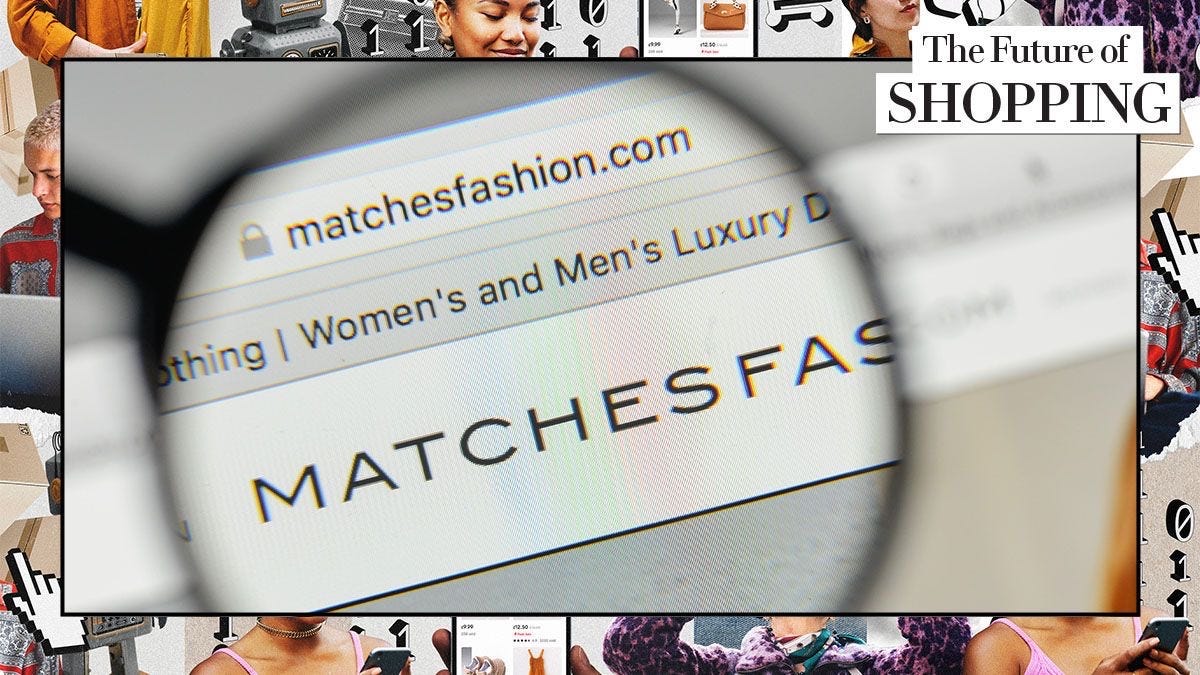
Yet in December 2025, two twenty-something entrepreneurs from Yorkshire announced they'd raised $150 million to resurrect what was once the pinnacle of online luxury shopping. As Business of Fashion's Cathaleen Chen pointedly asked: "But they don't answer the question of how this iteration of Matches will fix what broke the last version." Can proven competence at small scale translate to success at Matches scale, in a sector where even giants have failed spectacularly?
I. THE OPERATORS: PROVEN, BUT AT WHAT SCALE?
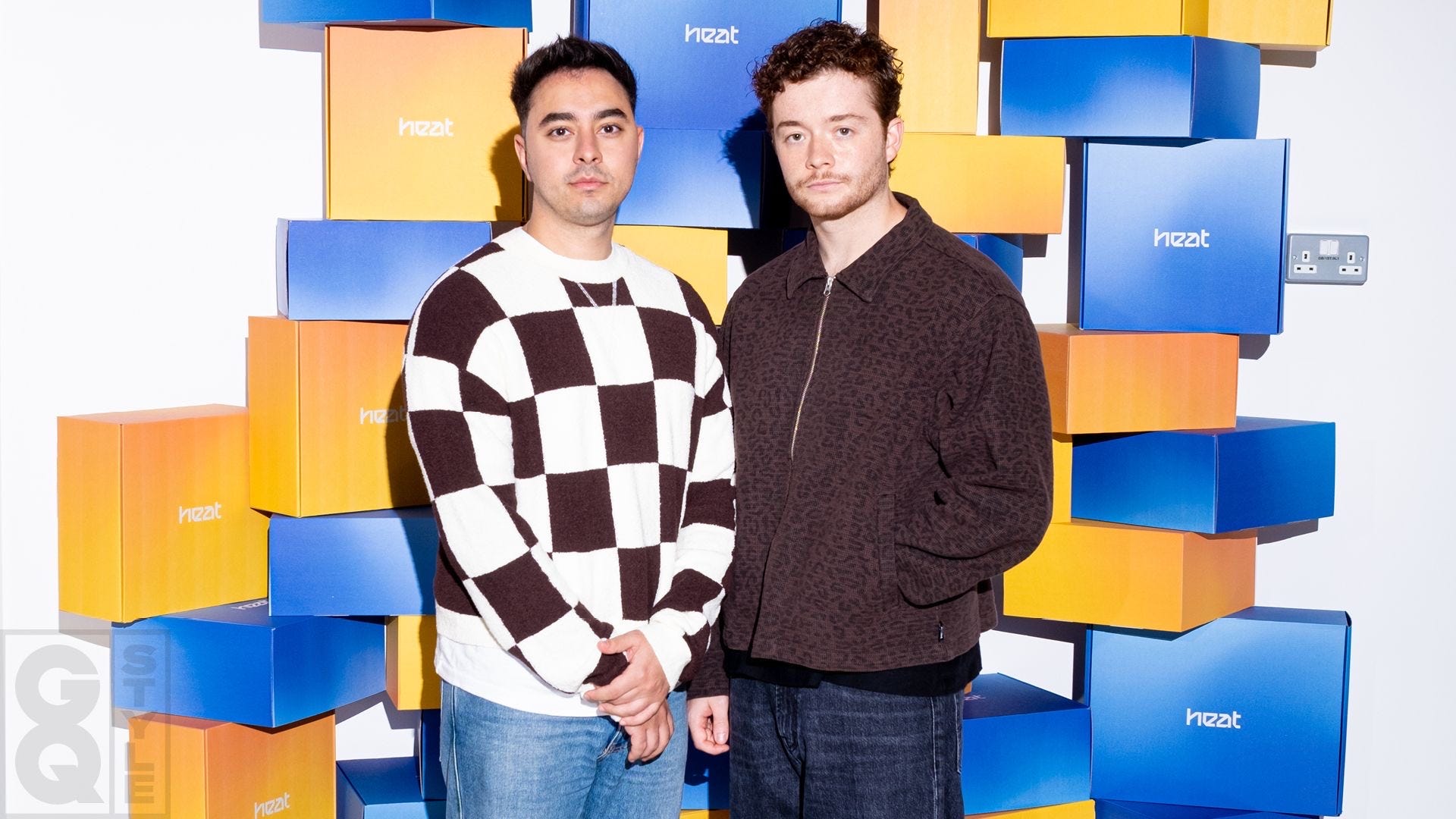
Joe Wilkinson and Mario Maher built their reputation on understanding overstock economics. Wilkinson's origin: flipping Yeezys for 5x profit, leading to personal shopping for Manchester United footballers. Maher: wholesale distribution. Both saw brands drowning in excess inventory with no elegant solution.
November 2019: Heat launched—mystery boxes priced £299-£650, guaranteed 2-3x retail value. First drop: 1,000 boxes sold, inventory they didn't have. Wilkinson: "We definitely didn't have the stock... back to our personal-shopper days, running around retailers in Italy." At small scale, recoverable. At Matches scale, this operational approach kills you.
Their cultural insight: Gen Z prefers narrative over newness. Maher: "Archive Helmut Lang is cooler than this-season Balenciaga." This proved true—for their audience. Heat's customers were early adopters, fashion obsessives, mystery-box enthusiasts.
But McKinsey's 2024 luxury report shows 68% of affluent millennials/Gen Z still prioritize "latest collections" over archival pieces. Matches needs mainstream affluent consumers who largely prefer new-season, full-price, status-signaling purchases.
2022: £4M from LVMH Luxury Ventures, Hermès family, Stefano Rosso. Significant validation. 2024: Mile launches—members-only app (£10-100/month) selling luxury 70-90% off. Now: 100+ brand partnerships. But critical metrics remain undisclosed: Mile's GMV, member count, churn rate.
Estimated based on comparables (Gilt, Rue La La):
• Conservative: 100K members × £30 avg tier × 12 months = £36M subscription + 2x merchandise GMV = £108M (~$135M) total GMV
• Optimistic: 200K members × £40 avg tier = £96M subscription + 2x = £288M (~$360M) GMV
• Likely reality: £150-200M GMV range, suggesting Mile alone doesn't justify Hulcan's valuation—everything depends on Matches scaling successfully.
Brand relationships evolved impressively: from "dirty little secret" (2019) to launching new-season products (2023). But this happened with off-price, opaque channels. Matches requires transparent, full-price relationships with brands who just lost £50M. As Luca Solca (Bernstein) observed years before Matches' collapse: "Selling luxury online through a multibrand business concept is very difficult."
Verdict: Proven operators at niche scale with genuine cultural intelligence. Unproven at mainstream luxury scale where operational complexity, customer acquisition costs, and margin pressure are exponentially different.
The fatal assumption: if you can do something small brilliantly, you can do something huge competently. Luxury retail is littered with corpses of people who believed that.
II. THE GRAVEYARD: STRUCTURAL FORCES, NOT POOR EXECUTION
The 2024-2025 carnage wasn't about incompetence—it was structural collapse:
Farfetch: $20B peak valuation → liquidation (February 2024) despite $500M Coupang rescue. José Neves, a genuine visionary with decades of experience, couldn't make it work.
SSENSE: Creditor protection (August 2025), $517M liabilities vs. $420M assets. US sales -28% YoY. De minimis repeal + 25% Canadian tariffs destroyed their model overnight.
YNAP: Sold by Richemont to Mytheresa at fraction of $5.3B paid (2018). Mytheresa cut 700 jobs (September 2025).
Matches: £800M → £52M → administration in 3 months. £40M operating losses (2022). 270+ jobs gone. £50M unpaid to brands.
Three structural tsunamis:
1. End of free money - 2022 rate hikes ended chronic-loss funding. Bain 2025: multi-brand margins compressed to 3-5% (vs. 8-12% in 2019).
2. Brand withdrawal - Top 20 luxury brands: 65% revenue from owned channels (vs. 45% in 2019). Why give 30-40% margin to intermediaries?
3. Regulatory apocalypse - De minimis repeal, tariffs, compliance costs. SSENSE proves this wasn't survivable even with strong positioning.
When Farfetch, SSENSE, and YNAP fail at the same challenge with vastly more resources, it stops being a management problem and starts looking like a structural problem. Wilkinson and Maher are betting that cultural intelligence changes the equation. History suggests it doesn't.
III. THE STRATEGY: ECOSYSTEM AS DEFENSE OR DISTRACTION?
Hulcan structure: Mile (off-price) + Matches (full-price) + Raey (owned-brand). Theory: diversification creates resilience. Reality: three complex businesses simultaneously.
Execution requirements:
Mile: Growing membership, low churn (<15% annually), reliable off-price access. Unknown: current performance, whether unit economics work.
Matches: 60-100+ brands, luxury operations, global logistics, profitable CAC, differentiated curation. Challenge: while brands remember £50M debt.
Raey: Design, manufacturing, inventory, brand positioning. Risk: generic contemporary brand without identity.
Diversification reduces risk when businesses are uncorrelated. But if Mile's struggle spooks brands who then cut Matches access, you haven't diversified—you've just built a more complex way to fail.
Capital reality check:
• $150M equity (superior to debt-loaded structure that killed Matches 1.0)
• Estimated burn: $8-12M/month (global luxury retail with three entities, not the $5-7M conservative estimate)
• Runway: 12-18 months, not 21-30
• Required milestones for Series B: $200-300M run-rate, positive unit economics, 40-60 committed brands, demonstrable retention
Achievable? Possibly. Probable given market conditions and execution complexity? Less certain.
IV. THE DEBT SHADOW: £50M TRUST DEFICIT
Brand executive scenario (Toteme SVP perspective): "In 2024, Matches collapsed owing us £1M—5-8% of annual revenue. We wrote it off, explained to our CEO, potentially cut staff. Now, 18 months later, same platform, same name, different owners want us to ship SS26 on 60-day terms. Our response? 'Never again.' Or at minimum: '30-day terms, smaller orders, we keep inventory until payment clears.'"
Wilkinson: "This is a new business, what's past is past." Legally correct. Strategically insufficient. Luxury runs on relationships, not legal structures.
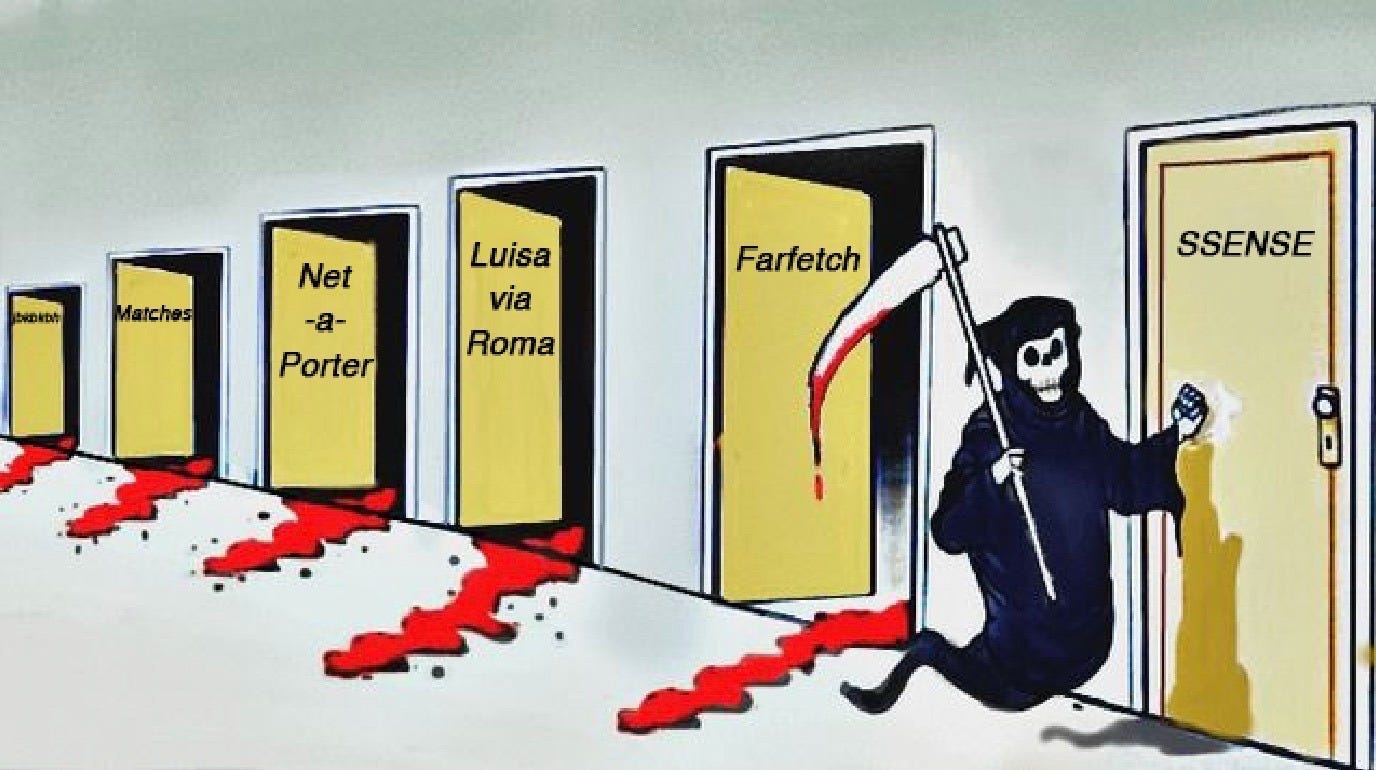
Trust in luxury is denominated in decades, not dollars. Wilkinson and Maher have $150 million in capital and 18 months to rebuild what took 30 years to destroy in 3 months.
Hulcan's counterarguments with critical rebuttals:
1. Clean capitalization → Matches 1.0 had capital too (£800M sale to Apax). Capital doesn't guarantee operational excellence.
2. Proven track record → At off-price, opaque scale. Different game entirely at transparent full-price mainstream luxury.
3. Different model → SSENSE had incredible cultural positioning and Gen Z loyalty. Still filed for bankruptcy. Cool doesn't pay bills.
As BoF's Cathaleen Chen wrote: "They don't answer the question of how this iteration of Matches will fix what broke the last version." Without top-tier brand participation, Matches becomes another mid-tier retailer—and those are dying too.
V. PROBABILITY ASSESSMENT: QUANTIFIED UNCERTAINTY
FACTORS IN FAVOR (45%)
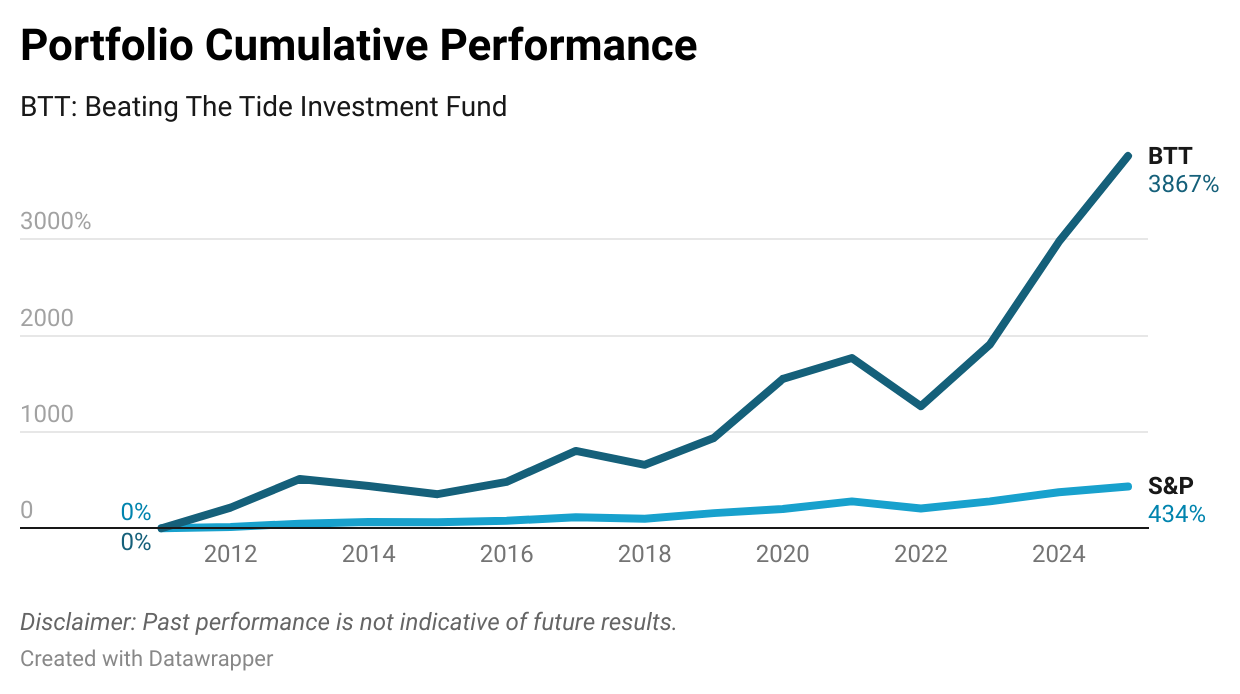
1. Adjacent competence (20%): Proven at Heat/Mile scale moving overstock elegantly. Question: does this scale 50-100x?
2. Superior capital structure (10%): Equity from aligned investors removes debt pressure. But capital alone doesn't solve structural problems.
3. Cultural positioning for subset (10%): Gen Z insight works for early adopters. Mainstream affluent adoption unproven (McKinsey: 68% still prefer new).
4. Timing window (5%): Competitor weakness creates opportunity. Doesn't create demand or fix economics.
FACTORS AGAINST (55%)
1. Brand toxicity (20%): £50M unpaid creates possibly irreparable damage. If 30-40% of potential partners refuse, assortment becomes generic.
2. Unproven scaling (15%): 100 brands/thousands customers ≠ 200+ brands/millions customers. Operational complexity, CAC, margins exponentially different. Most startups fail here.
3. Structural economics broken (10%): Brands favoring DTC, compressed margins, regulatory costs killed stronger players.
Cultural intelligence is not a substitute for broken unit economics. You can be the coolest retailer in the room and still go bankrupt—SSENSE proved that definitively.
4. Ecosystem complexity (5%): Running three entities simultaneously spreads resources. May become liability not asset.
5. Runway pressure (5%): Likely $8-12M/month burn = 12-18 months to prove model or raise Series B at higher valuation. Tight timeline given execution complexity.
Aggregate probability: 45-50% of meaningful success ($400-500M+ revenue, 2-3x return over 5-7 years). Better than random chance, far from assured, notably lower than investors likely modeled.
VI. EXTERNAL WILDCARDS: UNCONTROLLABLE VARIABLES
Beyond execution, external forces could dramatically impact outcomes:
Economic recession (2026-2027): Luxury discretionary spend typically drops 20-30% during downturns. Launches during recessions rarely succeed—consumers pull back, brands get conservative, funding dries up.
AI-powered personalization: LVMH, Kering investing heavily in AI recommendation engines. If these provide superior personalization, human curation's value proposition diminishes. Amazon/Alibaba's luxury pushes with AI could disrupt.
Fast-fashion upmarket migration: Shein, Temu exploring "affordable luxury" ($100-300 price points) with speed traditional luxury can't match. Squeeze from below while brands squeeze from above.
Geopolitical/regulatory: Trump 2.0 tariffs already impacting. Potential escalation, new compliance requirements (ESG, supply chain transparency) could add unmodeled costs.
Generational shift: Gen Alpha (current 12-18 year-olds) shows different patterns than Gen Z—more digital-native, sustainability-focused, potentially less interested in physical luxury goods. If they don't engage, the "next generation" thesis weakens.
These wildcards are unquantifiable but material. A 2026-2027 recession alone could push Bear scenario probability from 25% to 40%+.
VII. THREE FUTURES: BASE CASE MOST PROBABLE
BULL SCENARIO (25%): The Improbable Success
Everything clicks. Matches separates from toxic legacy, secures 40-50 credible brands. Cultural positioning resonates beyond early adopters. Mile scales to 400K+ members (<15% churn). Raey reaches £80-100M revenue. Ecosystem synergies materialize. By 2028-2029: $600-800M GMV, profitable, acquired for $700M-1B (5-7x return).
Why only 25%? Requires overcoming brand trust, scaling 50-100x flawlessly, proving Gen Z positioning mainstream-viable, achieving all while competitors aren't standing still. Each difficult; all simultaneously improbable.
BASE SCENARIO (50%): The Middling Outcome
Meaningful resistance. Top brands stay out, others impose restrictive terms. Matches builds respectable 50-60 brands. Mile plateaus at 150K-200K members as brands limit inventory. Cultural narrative works for segment, struggles mainstream. Raey respectable but doesn't break out. By 2027-2028: $250-400M GMV, marginally profitable. Acquired for $350-500M (2-3x return).
Why 50%? Most realistic. Competent operators with capital can build something viable. But market forces, scale challenges, brand baggage prevent breakthrough. Respectable mid-tier player—valuable but not transformative.
BEAR SCENARIO (25%): The Failure
Disastrous launch. Major creditors publicly refuse. Media narrative: "burned twice." Without top brands, can't differentiate. CAC higher than modeled. Mile crisis as brands cut access. Gen Z positioning too niche. Regulatory worsens. By mid-2027: burned $120-140M, no profitability path. Mile sold as acqui-hire ($40-60M). Matches shuttered. Raey sold ($5-10M). Investors lose 60-70%.
Why 25%? Material probability. Brand toxicity + unproven scaling + structural headwinds + execution complexity creates genuine failure risk. Many resurrections fail—and theirs typically had more experience.
VIII. VERDICT: INFORMED UNCERTAINTY
Final assessment: 45-50% probability of meaningful success ($400-500M+ revenue, 2-3x capital return over 5-7 years).
Wilkinson and Maher are genuinely competent operators with demonstrated abilities at niche scale. Their backing validates capabilities. Capital structure superior to Matches 1.0 removes debt pressure.
However, competence at one scale doesn't guarantee success at another. The gap between Heat/Mile (thousands, opaque, curated) and Matches (millions, transparent, comprehensive) is where most scale-ups fail. Structural forces that killed predecessors haven't disappeared.

Most critically, key metrics remain undisclosed: Mile's actual performance, true burn rate, exact milestones. Without these, probability assessments are educated guesses using industry benchmarks, not rigorous models.
Decision timeline: Mid-2027. Success indicators: 40-50 credible brands secured, acceptable CAC, successful brand separation, Mile growth continues, operational execution without major stumbles. Failure indicators: Public brand refusals, weak launch metrics, higher burn, Mile stalls, operational issues, negative media narrative.
Advantages: fresh perspective, cultural intelligence, superior capital structure, demonstrated adjacent competence. Disadvantages: limited experience at required scale, toxic brand legacy, structural forces unchanged, execution complexity few navigate successfully.
Competence is necessary but not sufficient. That's the lesson of Farfetch, SSENSE, YNAP. Wilkinson and Maher are betting that this time, in this moment, with this structure, competence becomes sufficient. We'll know by mid-2027 if they're right.
Whether they succeed or fail, Wilkinson and Maher deserve recognition for attempting to solve a real problem in a sector desperate for new thinking. Healthy skepticism combined with respect for the attempt is the appropriate stance.
The game is on. The odds are uncertain. And that uncertainty—honestly acknowledged—is perhaps the most intellectually honest conclusion available.
Armando Zuccali
___
Sources: Business of Fashion, WWD, Financial Times, The Guardian, FashionNetwork, Retail Gazette, Tank Magazine, Commerce Thinking, Vogue Business, Bain & Company Luxury Goods Worldwide Market Study (2024-2025), McKinsey State of Fashion Report (2024), Bernstein Research, and publicly available financial filings. Quantitative estimates based on industry benchmarks from comparable businesses (Gilt, Rue La La, Moda Operandi, Farfetch pre-collapse data).
Acknowledgment: This analysis benefited from critical feedback identifying initial optimism bias. Probability assessments revised from 60-65% to 45-50%, with enhanced quantitative estimates, skeptical voices integrated, and external wildcards addressed. Runway estimates adjusted from 21-30 months to 12-18 months based on comparable burn rates. Signature phrases added to enhance quotability while maintaining analytical rigor.